
EAIF newsletter
European AI Forum (EAIF) newsletter provide you on a monthly basis with insights, news and updates from the European AI ecosystem. AI regulation and EU policy, national AI activities, upcoming events.

In this 2026 January newsletter you can find the following topics:
Key AI Insights from the EAIF Team at Davos 2026
New study announced - AI Geopolitics 2030: The new power distribution through strategic AI sovereignty
Agentic AI: Leveraging European AI talent and Regulatory Assets to Scale Adoption
EU invests over €307 million into artificial intelligence and related technologies
AI & State Modernization: From Talk to Action
Updates from EAIF member countries
Editor's Picks:
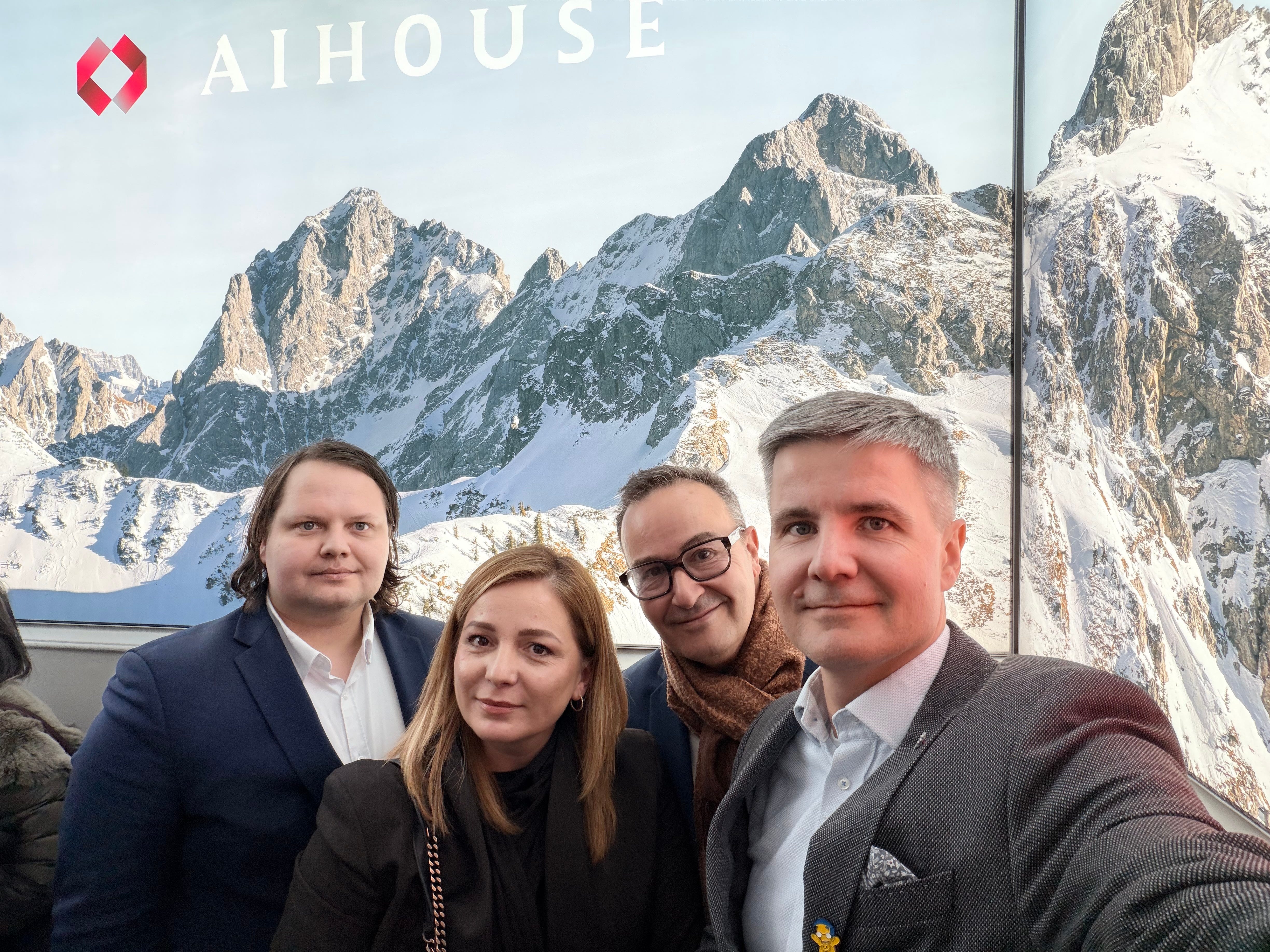
Key AI Insights from the EAIF Team at Davos 2026
Europe’s “trust + industry” advantage met the reality of scale
The most striking Davos 2026 undercurrent, from a European lens, was the quiet admission that the last AI wave was not primarily won by having the best ideas, but by controlling the stack: compute, chips, infrastructure finance, and distribution. The European “strength” (research, industrial depth, regulation) didn’t automatically convert into platform dominance—and that gap showed up repeatedly as speakers moved from ethics to physical constraints. In the discussion on AI infrastructure and long-term buildout, the conversation became almost brutally tangible: power, concrete, copper, and skilled trades became strategic bottlenecks, not footnotes. Listen full event here.
In parallel, Europe’s comparative advantage was framed less as “innovation leadership” and more as being a reliable governance environment—but even that was portrayed as insufficient unless matched with industrial capability. The geopolitical framing in AI Power Play, No Referees put Europe in an uncomfortable but clarifying mirror: transatlantic ties remain economically central, and Europe still holds globally critical tech assets (chips equipment, telecom infrastructure, enterprise software). The subtext: Europe is not powerless—yet it must act like a producer bloc, not a rule-making observer.
And perhaps most “European” of all: the public-infrastructure framing. In Large Scale AI as a Public Infrastructure, the premise was that AI is shifting from product to systemic infrastructure, raising a European-style question: is it a public good like roads and grids, and if so—who governs it and who gets access?
The “hard part” is diffusion, sovereignty, and operational trust
Davos 2026 treated the near term as a scaling problem, not a model problem. In the WEF session Scaling AI—Now Comes the Hard Part, the emphasis was that most organizations have pilots, far fewer have scaled, and the real work is talent, operating model redesign, and use-case discipline: leaders must ask whether AI enables things they couldn’t do before, rather than incremental automation.
From a European perspective, this matters because Europe’s opportunity is not to “out-OpenAI OpenAI,” but to win by embedding AI into complex, regulated, high-value systems: manufacturing, mobility, energy, health, public services. That same “real economy” orientation showed up in discussions of public sector modernization: AI for real-time service delivery, predictive administration, and citizen-centric models—exactly where Europe’s administrative capacity and regulatory maturity can become an execution edge rather than a drag. Listen full event here.
Europe’s near-term competitive question at Davos was also sovereignty—less as ideology, more as resilience. The Public Infrastructure session put European compute on the map through concrete examples: LUMI (pan-European supercomputing) and the push for models and infrastructure “on European soil,” including the strategic logic of not needing private citizen data to train useful models—and of designing infrastructure so customers can trust their data remains theirs.
The near-term also included sector-specific acceleration narratives that fit Europe’s strengths: for example, the drug discovery panel described early signs of autonomous scientific discovery, where systems generate “leaps” humans don’t fully explain—and where the bottleneck shifts from technical to sociological adoption (institutions and people). Listen full event here.
European takeaway for the next 12–24 months: competitiveness becomes a function of deployment capacity (skills, data readiness, governance, procurement speed), not just frontier research.
Europe’s bet is not “AGI first,” but “human agency + resilient infrastructure”
On long-horizon questions, Davos 2026 split into two narratives: (a) the AGI/superintelligence trajectory and (b) the institutional resilience trajectory. What’s interesting from a European lens is that Europe tends to treat (b) as the “real” agenda—yet Davos showed that (a) is shaping capital allocation and geopolitics regardless.
At AGI Night, the debate was not framed as sci-fi, but as risk, hype, and governance under uncertainty—with explicit disagreement about whether progress is accelerating or slowing, whether scaling alone is sufficient, and how worried we should be about systemic economic fallout if AI valuations correct sharply. Europe’s long-term stance aligns with the “avoid false dichotomies” theme that emerged there: current harms and existential risks aren’t competing agendas; safety and standards compound over time. Listen all event here.
Meanwhile, The Day After AGI put a more geopolitical and institutional frame around long-term governance: even proponents of building more capable systems emphasized the “technological adolescence” problem—how societies get through transformative capability jumps without losing control, and how minimum safety standards might require international coordination. The discussion also explicitly acknowledged the instability of the current geopolitical environment (including US–Europe tensions and US–China competition), making a “CERN-like” cooperative model sound desirable but hard to realize.
For Europe, that long-term reality loops back to the infrastructure thesis: if AI becomes as foundational as energy grids, then Europe’s long-term strategic power lies in being the place where AI can be audited, trusted, and integrated into critical systems—not as an afterthought, but by design. The most European long-term argument at Davos wasn’t “slow down,” it was: make capability growth compatible with democratic oversight and public legitimacy—because without that, diffusion breaks politically even if it works technically.
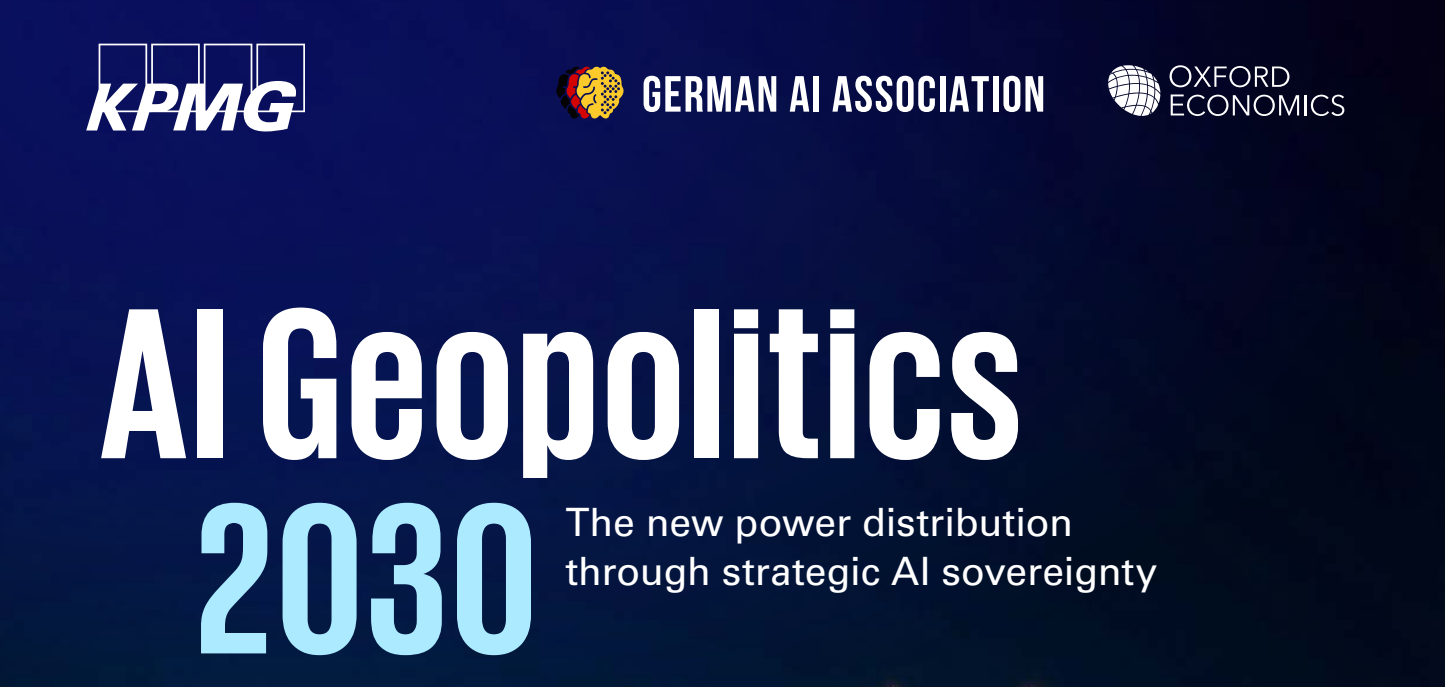
New study announced - AI Geopolitics 2030: The new power distribution through strategic AI sovereignty
This comprehensive analysis is the product of a high-level collaboration between KPMG in Germany and the German AI Association with Oxford Economics providing the quantitative foundation for the Strategic AI Capability Index (SACI) was announced at AI House Davos.
The latest AI Geopolitics 2030 report reveals a stark “conversion gap” defining the current global race for technological supremacy. According to the Strategic AI Capability Index (SACI), the United States maintains a decisive lead with a score of 75.2, nearly 30 points ahead of Europe (48.7) and China (48.2). This disparity isn’t merely a result of individual breakthroughs; it reflects the American ecosystem’s ability to create a self-reinforcing loop where deep capital markets and rapid enterprise adoption translate research into immediate productivity gains. In contrast, Europe is characterized as a landscape of “fragmented excellence.” While it leads the world in Responsible AI frameworks and academic output, it remains hamstrung by inconsistent adoption, higher energy costs, and a “two-speed” regional reality that prevents its strengths from coalescing into a unified systemic advantage.
Looking toward 2040, the study moves beyond simple rankings to warn that AI power is becoming “re-territorialized”—a paradox where the more influence moves into code, the more fiercely it is anchored in physical leverage over energy, compute, and hardware. Through four potential futures, from a collaborative “Federated Future” to a fragmented world of “Sovereign Blocs,” the report underscores that strategic sovereignty is now a mission-critical priority for 95% of senior executives. For Europe to avoid a future of structural dependency on non-continental hyperscalers, the path forward requires a pivot from “regulation to innovation leadership.” This means moving beyond the safety of the AI Act to treat compute and capital as strategic resources, ensuring that the continent doesn’t just define the rules under which intelligence circulates, but actually operates the “rails” on which the future economy runs.
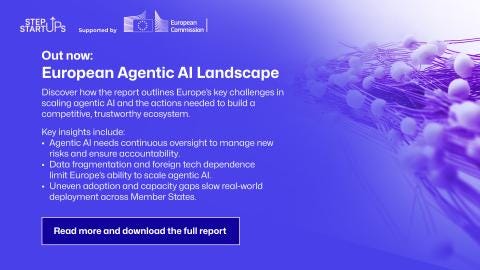
Agentic AI: Leveraging European AI talent and Regulatory Assets to Scale Adoption
Agentic AI marks a clear shift from isolated automations to coordinated, goal-driven systems that can plan, act, and learn across complex environments. The study shows that this transition is already underway, with agentic AI beginning to reshape workflows in areas such as public administration, finance, and healthcare, where multi-step decision-making and responsiveness matter most. Europe enters this phase with strong assets: deep AI engineering talent, a maturing startup ecosystem, and a regulatory framework that already addresses many of the risks associated with autonomous systems, from transparency to human oversight.
At the same time, the report is clear-eyed about what still holds large-scale adoption back. Fragmented data, dependence on non-European infrastructure, uneven implementation capacity, and uncertainty about how to operationalise compliance slow the move from pilots to production. The core insight is that Europe’s advantage will not come from choosing between innovation and regulation, but from translating its regulatory foundations into practical, auditable control points while investing in sovereign data, compute, and flagship use cases. If these gaps are addressed, agentic AI can become not just a technological upgrade, but a catalyst for more resilient, trustworthy, and competitive digital systems across the continent.
EU invests over €307 million into artificial intelligence and related technologies
The European Commission has launched two new calls under Horizon Europe’s Digital, Industry and Space cluster, committing €307.3 million to strengthen Europe’s digital innovation and strategic competitiveness. Of this, €221.8 million targets trustworthy AI, advanced data services and strategic autonomy—supporting priorities such as the Apply AI Strategy, next-generation AI agents, robotics, quantum and photonics, as well as the Open Internet Stack Initiative to build European sovereign digital commons—while a further €85.5 million focuses on open strategic autonomy in emerging technologies and advanced materials. Open until 15 April 2026, these calls are designed to translate Europe’s human-centric vision into deployable technologies and invite participation from companies, public bodies and research organisations across the EU and partner countries.
AI & State Modernization: From Talk to Action
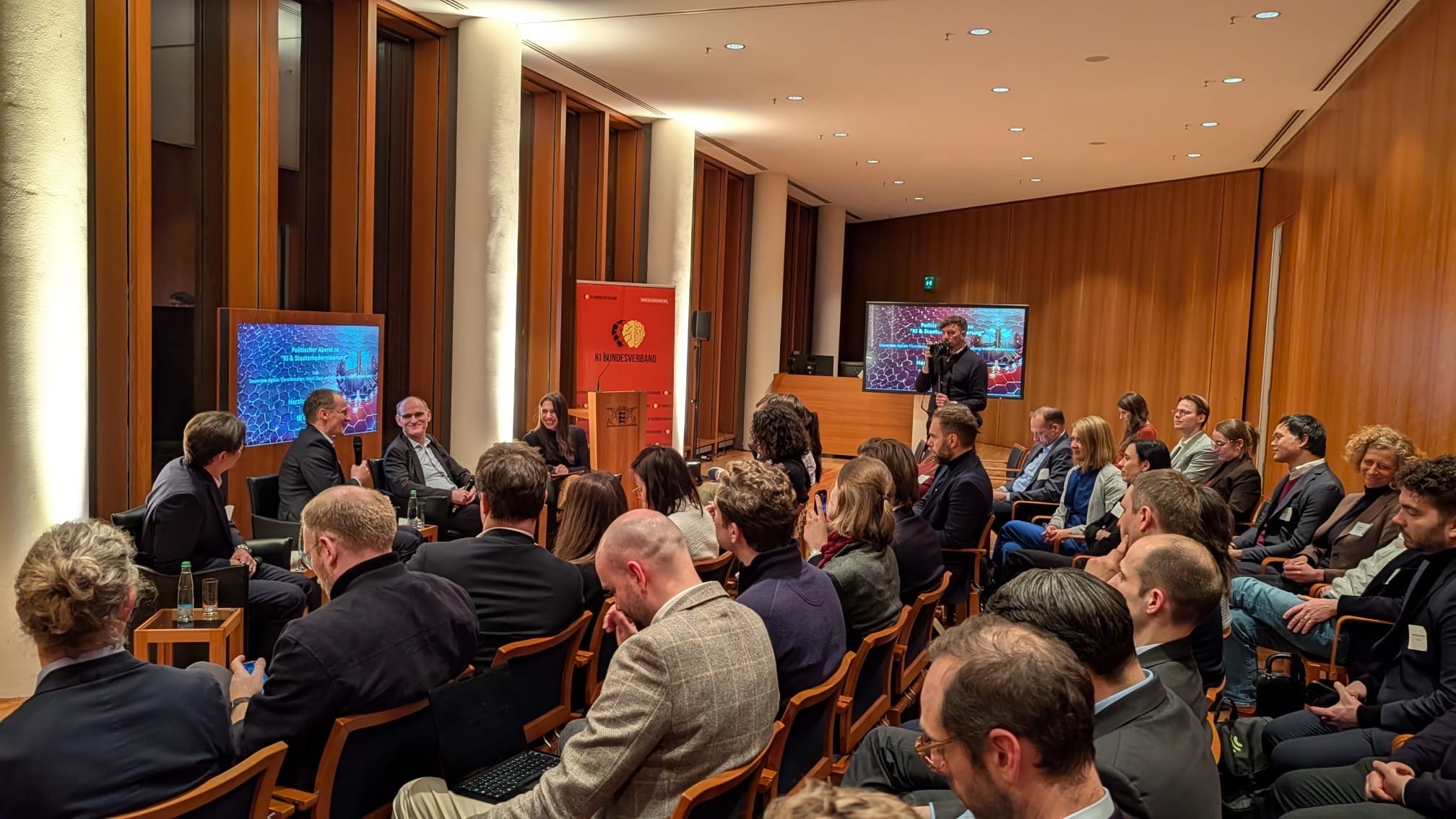
As part of a political evening hosted by the German AI Association and Christ & Company in Berlin , participants discussed how a sovereign digital transformation of government and public administration can succeed. Moderated by Valentina Kerst, the panel brought together Henri Schmidt, Elias Schneider from Codesphere, and Dr. Alfred Kranstedt, Director of the Federal IT Services Center (Informationstechnikzentrum Bund), to explore opportunities, obstacles, and concrete next steps for deploying AI in the public sector.
The current situation reveals a palpable sense of momentum, driven by new political structures and improved cooperation between federal and state levels. At the same time, measurable productivity gains from AI in government and administration have so far fallen short of expectations. This raises the central question: How can we move from experimental applications to genuine automation and impact at scale?
What matters now is developing a sustainable federal modernization agenda with clear priorities, making bold decisions in politics and administration, and adopting a broader understanding of digital sovereignty through stronger use of European solutions. This includes protecting and strengthening Europe’s digital and industrial core, positioning the state as an innovation-capable client with faster and more reliable procurement processes.
Updates from EAIF member countries
🇦🇱Albania:
AI for governance and EU accession – A Verfassungsblog article analysed how Albania has been using AI since 2023 to speed EU accession and fight corruption by translating legislation and reviewing procurement. In January 2026 the government’s AI system “Diella” – appointed as a cabinet‑level minister – continued to oversee public procurement. While the approach expedites reforms, commentators warned that relying on technology may distract from necessary structural and democratic reforms .
🇦🇹 Austria:
OSCE AI‑governance visit – OSCE Special Representative Federica Onori met Austrian experts and OSCE institutions in Vienna to advance evidence‑based AI governance. Discussions covered generative‑AI‑driven disinformation, algorithmic amplification, human rights and security, highlighting the need for parliamentary dialogue and cross‑dimensional co‑operation .
Industrial strategy funding – Austria’s new industrial strategy commits €2.6 billion in 2026‑29 to develop nine “key technologies,” including artificial intelligence, microchips and quantum technologies .
Life Science Center plan – The City of Vienna announced a €170 million innovation and AI hub in Neu Marx. The centre will provide 14,000 m² of lab and office space, create ~500 research/AI jobs and house the AI‑focused institute AITHYRA to promote AI‑supported biomedical research .
OpenClaw open‑source project – Austrian developer Peter Steinberger’s AI‑agent platform (formerly Clawdbot/Moltbot) was rebranded “OpenClaw” after a legal request. The decentralised assistant runs locally, gained 100 k GitHub stars and 2 million visitors in a week, and emphasises security and community‑driven development .
🇧🇬 Bulgaria:
EU GOVSATCOM membership – The caretaker government approved Bulgaria’s accession to the EU’s secure satellite‑communication system, establishing a competent authority within the ministries of Innovation & Growth and Electronic Governance. Participation ensures reliable, secure communications for public authorities and crisis management .
Cyber‑risk awareness – The Allianz Risk Barometer 2026 ranked cyber incidents as the top risk for Bulgarian businesses. AI‑related risks jumped from tenth to second place globally, reflecting concerns about liability, ransomware and IT‑system failures .
High‑risk AI question to EU Court – Bulgarian judges asked the Court of Justice of the EU whether road‑traffic‑accident simulation software qualifies as a high‑risk AI system under the EU AI Act and whether competition rules allow courts to use such software .
🇨🇿 Czech Republic:
BUT joins Czech Association of AI – Brno University of Technology became a member of the Czech Association of Artificial Intelligence. The association has over 400 members and helps implement the EU AI Act and the national AI strategy; membership offers access to working groups and legislative consultations .
Machine‑learning soil mapping – EU researchers used machine learning to map contamination of potentially toxic elements in Czech farmland, predicting where chemical levels exceed safety guidelines and making the data available via an online platform .
🇭🇷 Croatia:
EU‑India AI co‑operation forum – the Faculty of Organisation and Informatics (FOI) in Varaždin hosted a session on AI co‑operation between Croatia, the EU and India. The Indian ambassador urged stronger ties, while FOI leaders highlighted opportunities from the EU‑India trade and technology agreement and Croatia’s expertise .
InsiderCX funding – Croatian start‑up InsiderCX raised €1.5 million in seed funding led by GapMinder and Silicon Gardens Fund to expand its AI‑driven patient‑experience platform across Europe and enhance its capabilities .
Money Motion 2026 call – Applications opened for the Money Motion conference’s start‑up competition (AI and fintech categories). Prizes exceed €60,000; the event will select finalists by February .
🇫🇷 France:
France – AI sovereignty, resilience and ecosystem structuring - France is doubling down on technological sovereignty and resilience. A new Digital Resilience Index offers organisations a practical way to assess dependencies across key layers (applications, data, platforms, infrastructure, and skills). In parallel, AI Factory France is progressing through its structuring phase to strengthen national AI capabilities and tighten links between research, industry, and deployment. Hub France IA supports this momentum by coordinating the ecosystem, mapping AI actors, and connecting French initiatives with European programmes.
Responsible AI, cybersecurity and data protection - The French Data Protection Authority (CNIL) remains highly active. In January, it fined France Travail (€5 million) over inadequate security measures for jobseekers’ personal data, signalling heightened enforcement on cybersecurity and data protection. The CNIL has also released English versions of its AI “How-to Sheets,” providing practical guidance on AI, GDPR, and data protection. Hub France IA additionally published a white paper on cybersecurity and attacks on AI systems, feeding into the wider European debate on robustness, threat mitigation, and secure AI deployment.
Digital Sovereignty Meetings – At Bercy, Minister Anne Le Hénanff launched a Digital Sovereignty Observatory and Digital Resilience Index to map France’s digital dependencies. A campaign launched earlier in January warns about the societal impacts of recommendation algorithms and stresses enforcement of the Digital Services Act .
Davos and CAIE launch – At the World Economic Forum, President Emmanuel Macron led a large French tech delegation and announced the Centre Européen pour l’Excellence en IA (CAIE) in Paris, a partnership between WEF and VivaTech. Leaders stressed building a sovereign, inclusive and human‑centric AI ecosystem, and start‑ups like H Company and Bioptimus showcased France’s AI ambitions .
Defence contract for Mistral AI – The French Ministry of the Armed Forces signed a framework agreement enabling defence agencies to use Mistral’s AI models and software, hosted on French infrastructure and fine‑tuned on defence data, reinforcing technological sovereignty .
Visio platform announcement – The government announced plans to replace Zoom and Teams with a domestic platform called Visio. Hosted on a sovereign cloud, Visio offers AI‑powered transcription via Pyannote and aims to roll out to 200,000 civil servants, promising annual savings of about €1 million per 100,000 users .
🇩🇪 Germany:
BMBF AI investment – Germany’s Federal Ministry of Education and Research authorised a €31.6 million package to integrate AI across universities and research institutions. The funding supports autonomous agents for administration, generative‑AI curricula and sovereign AI ecosystems with high‑performance computing .
Large funding rounds – Berlin‑based Parloa raised $350 million in Series D financing, tripling its valuation to $3 billion and planning to expand in Europe and the U.S. . Health‑tech startup Recare secured up to €37 million growth capital to scale its AI platform for hospital workflow automation and expand internationally .
🇬🇪 Georgia (Georgian Artificial Intelligence Association):
New Projects Launched
AI Literacy Program: We launched this across Georgia to help the public and businesses understand AI. It’s all about giving people the basic skills and knowledge they need to use AI in their daily lives and work.
Student Research Club: This is an elite club for a small group of hand-picked students. They are already working on real-world AI research projects, guided by experienced supervisors to help them become top-tier experts.
Top 3 Priorities:
Developing AI Professionals: Training the next generation of experts to lead the industry.
Raising Awareness: Making sure the public and businesses truly understand the value of AI.
Strengthening the Community: Bringing AI professionals together to collaborate and share knowledge.
🇱🇹 Lithuania:
On January 13, 2026, the Artificial Intelligence Association of Lithuania
hosted the 5th annual AI Awards, recognizing the most impactful achievements in AI across business, science, education, innovation, and public good.
🏆 AI Company of the Year – Cast AI
🏆 Rising AI Star – Sintra.ai
🏆 AI Innovation of the Year – GrainODM
🏆 AI for Social Good – AI Foundations Program by Women Go Tech
🏆 AI Educator of the Year – “Du Bitai” show (Lukas Keraitis
🏆 Young AI Talent – Marcin Pauksztełło (Unive.AI)
🏆 AI Publication of the Year – Jurgis Pašukonis (Nature, Dreamer V3)
🏆 Young Researcher AI Publication – Justas Dauparas, PhD (Nature Methods, LigandMPNN)
AI cooperation with Poland – Minister Edvinas Grikšas visited Warsaw to sign a bilateral agreement with Poland’s digital‑affairs minister. The pact aims to strengthen AI cooperation, exchange best practices, coordinate infrastructure and support Lithuania’s national AI centre .
SustAInLivWork Centre – Kaunas University of Technology announced a Centre of Excellence of AI for Sustainable Living and Working. The centre will focus on industry, transport, energy and healthcare; provide labs with high‑performance computing, robotics and unmanned systems; and develop training in ethical and explainable AI .
Sovereign AI platform project – the Lithuanian Radio and Television Centre (Telecentras) signed a letter of intent with Embedded LLM, CBRX and Neural.ai to develop an independent AI platform hosted on Telecentras infrastructure. The platform will comply with EU data‑protection laws and serve state institutions and businesses, reinforcing national data sovereignty .
🇳🇱 Netherlands:
Dutch Data Protection Authority’s warning – The Autoriteit Persoonsgegevens published a position paper on the EU’s Digital and AI Omnibus proposals. It warned that redefining personal data and reducing transparency would hinder AI accountability and stressed that organisations must remain responsible for AI knowledge .
AI Governance Forum – The AI Governance Forum held in Amsterdam gathered legal, compliance and policy professionals to discuss AI regulation and ethics. Topics included implementing the AI Act, privacy compliance, audits and ethical AI design .
🇵🇱Poland:
FunkyMEDIA AI Search Agency – Polish marketing firm FunkyMEDIA launched a dedicated AI Search Agency to help organisations build “AI‑ready” and “AI‑first” content strategies, reflecting the rise of AI‑driven search and voice assistants .
Davos session on business logic – The Polish Business Hub hosted “Intelligence at Scale: How Digital Transformation and AI Redefine the Logic of Business” at Davos, inviting leaders to discuss AI opportunities and challenges, including cybersecurity, ethics and workforce adaptation .
🇷🇸Serbia:
Serbia to Become a Regional AI Hub - Serbia is set to become the owner of the largest supercomputer cluster in Southeast Europe by the end of 2026 or early 2027, reinforcing its position as an emerging regional hub for artificial intelligence and advanced technologies. The project, valued at EUR 50 million, is being developed in cooperation with France and is currently entering its final preparatory phase, with ratification of the intergovernmental agreement expected in 2026.
🇸🇪 Sweden:
Language‑model collaboration – The National Library of Sweden and Språkbanken Text announced deeper collaboration, funded by SEK 40 million. The partnership will expand storage and computing capacity and establish an AI lab to develop Swedish language models and strengthen linguistic sovereignty .
National data‑sharing directive – the Swedish government mandated the Agency for Digital Government (Digg) to coordinate data sharing, create secure processing environments, federated data models and “data highways,” and accelerate AI development across sectors .
Have news to share: newsletter@eaiforum.org
Editor: Linas Petkevičius, PhD
Contact: info@eaiforum.org
Website: eaiforum.org
LinkedIn: linkedin.com/company/eaiforum