
EAIF newsletter
European AI Forum (EAIF) newsletter provide you on a monthly basis with insights, news and updates from the European AI ecosystem. AI regulation and EU policy, national AI activities, upcoming events.

In this 2026 July newsletter you can find the following topics:
EC presents EU Action Plan on Cybersecurity and Artificial Intelligence
EU and OECD unveil AI literacy framework for schools
AI Gigafactories call with up to €10 billion in public funding
Hamburg Declaration Delivers First Year Results: Responsible AI Reaches Millions
Save the Date — 12th EAIF Annual Conference · 29 September 2026 · Brussels
Updates from EAIF member countries
Editor's Picks:

EC presents EU Action Plan on Cybersecurity and Artificial Intelligence
On 7 July 2026, the European Commission adopted its Action Plan on Cybersecurity and Artificial Intelligence. The plan responds to the dual impact of frontier AI — which can significantly strengthen cyber defence capabilities while also enabling more automated and sophisticated cyberattacks. It is built around three main pillars: making frontier AI safe and accessible for European cybersecurity through new EU evaluation capacity, a European Blueprint for structured access, and a secure testing platform; preparing the EU’s cyber ecosystem by reinforcing fundamentals, accelerating vulnerability management and patching, and launching a Critical Open Source Resilience Campaign; and scaling European AI capabilities for cyber through increased investment, a dedicated Grand Challenge on AI-assisted vulnerability remediation, and support for sovereign frontier AI development. The Action Plan aims to help Member States and organisations adapt to AI-driven threats while strengthening Europe’s technological sovereignty and cyber resilience.

EU and OECD unveil AI literacy framework for schools
As artificial intelligence becomes woven into everyday life, the question is no longer whether students should learn about AI—but how. Recognizing this, the European Commission and the OECD have introduced a new AI Literacy (AILit) Framework for primary and secondary education, offering schools a practical roadmap for preparing young people to navigate an AI-driven world. Rather than focusing solely on using AI tools, the framework emphasizes a broader set of competencies: understanding how AI works, critically evaluating its opportunities and risks, and engaging with it ethically and responsibly. Built around four dimensions and 19 competencies, and supported by classroom examples, the framework provides educators, school leaders, policymakers, and learning designers with a shared foundation for embedding AI literacy into teaching. As AI continues to reshape learning, work, and society, initiatives like this signal a shift from treating AI as a technology topic to recognizing it as an essential life skill for the next generation.
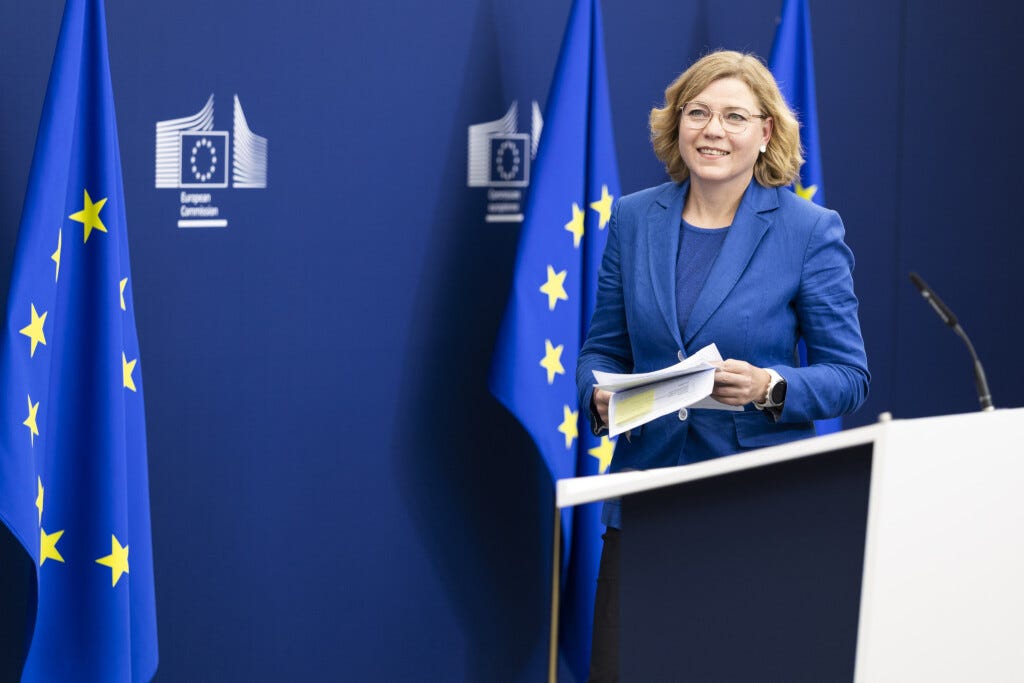
AI Gigafactories call with up to €10 billion in public funding
The European Union has launched a call for proposals to build up to seven AI Gigafactories, a flagship initiative designed to dramatically expand Europe’s sovereign AI computing capacity. Backed by up to €10 billion in public funding and expected to unlock more than €30 billion in total investment, the facilities will provide cutting-edge infrastructure for training and deploying frontier AI models while supporting startups, researchers, industry, and public institutions. The program also aims to reduce Europe’s dependence on foreign AI infrastructure by combining advanced chips, cloud platforms, and energy-efficient data centers under EU standards for security, privacy, and ethics, with applications open until 12 November 2026 and the first Gigafactories expected to begin operations in 2027.
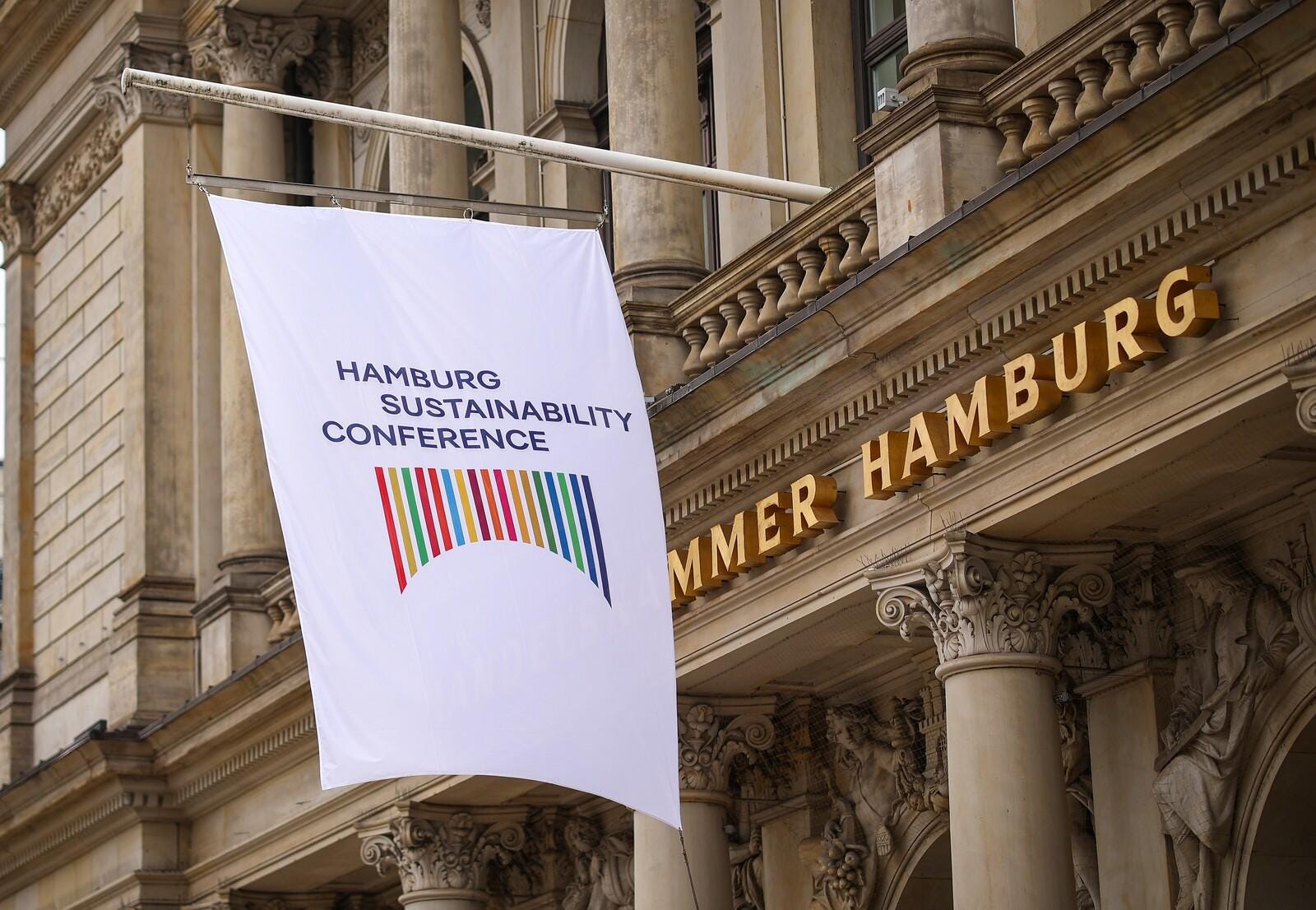
Hamburg Declaration Delivers First Year Results: Responsible AI Reaches Millions
One year ago, the UN Development Programme (UNDP) and Germany’s Federal Ministry for Economic Cooperation and Development (BMZ) launched the Hamburg Declaration on Responsible AI for the SDGs, the first international declaration on advancing responsible AI in development cooperation. It now has around 60 endorsers: governments, companies, international organizations, and NGOs.
At this year’s Hamburg Sustainability Conference, on 30 June, endorsers reported their first implementation results. Among them:
More than 256,000 people trained in AI skills across the Global South
Over 270,000 children reached through an AI-supported vaccination campaign
1.5 million GPU hours of AI computing capacity provided to African startups
Open-source AI models developed for 61 African languages largely ignored by Big Tech
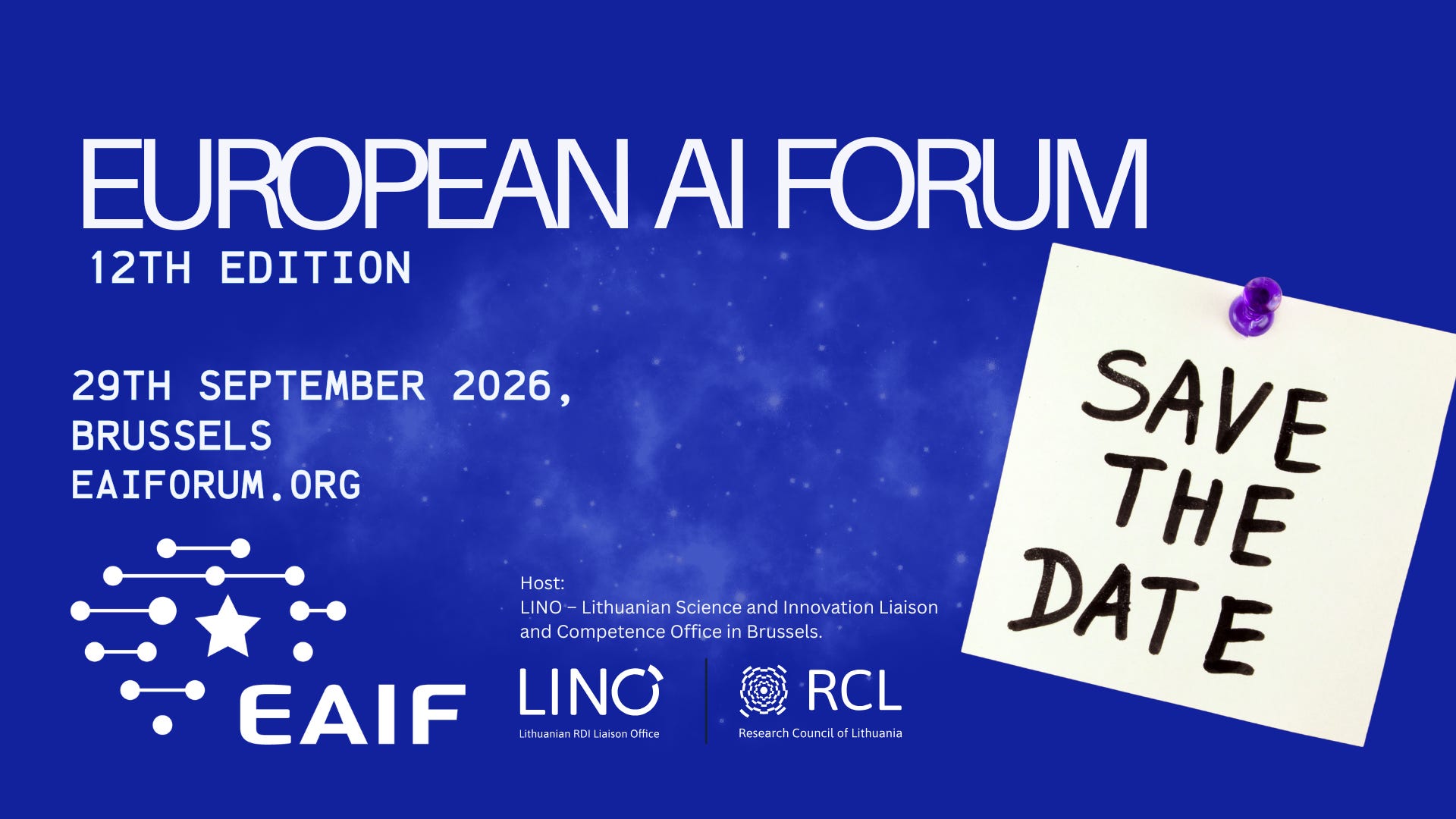
Save the Date — 12th EAIF Annual Conference · 29 September 2026 · Brussels
Mark your calendars: on 29 September 2026, the European AI Forum will bring its annual conference to Brussels, convening national AI associations, policymakers, researchers, and industry leaders from across Europe. More than another conference, the event has become one of the continent's key meeting points for shaping AI governance, exchanging ideas on the implementation of the AI Act, and strengthening cross-border collaboration within Europe's AI ecosystem. As debates over competitiveness, regulation, and technological sovereignty continue to intensify, this year's gathering promises to be an important forum for aligning policy with innovation—and for ensuring that Europe's AI future is built collectively, not in silos.
Updates from EAIF member countries
🇦🇱Albania:
MeetKai and Albania’s National Agency for Information Society sign MOU for joint venture on sovereign AI (Albanian-language models, infrastructure, public-service applications). Link
Albanian government stake (~$10 million / 0.08 %) in Thinking Machines Lab noted in connection with the lab’s first model release. Link
Startup grant schemes (Grant 26) prioritising digital / AI projects open. Link
🇦🇹 Austria:
Graz city administration preparing to roll out its own AI tool for public services. Link
Europe’s largest AI summer school (ESSAI 2026) opens in Vienna with 400+ researchers, supported by the Ministry for Innovation and focused on Digital Humanism / hybrid AI. Link
Infineon Austria highlights AI-driven demand for energy-efficient chips produced in Austria. Link
AI Austria monthly update: Austrian startup Ora Computing raises €3.5 million seed for foundation-model compression software; AI Factory Austria hardware procurement advances (€53 million) Link
Vienna startup AI Enlite (power-grid AI) featured for preventing blackouts; already working with operators in France and the Netherlands. Link
European Agentic AI Bootcamp (20–22 July) run jointly by AI Factory Austria and other European AI Factories, ~250 participants. Link
🇧🇬 Bulgaria:
President Iliana Yotova discusses AI Gigafactory opportunity with EU Commissioner; Bulgaria selected as one of six EU hosts. Link
Ministry of Innovation adds >€71 million, supporting 286 more SMEs for Industry 4.0 technologies including AI and cloud (total >€125 million, 512 firms). Link
Innovation Minister Ivan Vassilev speaks on positioning Bulgaria as an active tech player, AI adoption in administration and a “Council of Robots” Link
🇨🇿 Czech Republic:
Czech village of Ratiboř experiments with 24/7 AI mayor avatar for public information. Link
Czech National Bank Governor Aleš Michl discusses AI opportunities and risks (including job impact study) at Colours of Ostrava. Link
Startup law advancing toward inter-ministerial review, aiming for tax incentives for certified startup investors. Link
CzechInvest launched/promoted Czechia Dealroom, a national digital map covering 1,700+ funded Czech startups and 650+ investors, enabling tracking of funding, growth and international expansion across the innovation ecosystem, including AI companies. Link
🇭🇷 Croatia:
HOPS (grid operator) approves technical blueprint for Pantheon AI’s planned 1 GW AI data-centre campus in Topusko (€50 bn project, infrastructure >€500 m). Link
Croatian AI influencer-marketing platform Hypefy raises $7.2 million Series A. Link
“Artificial Intelligence: from concept to application” becomes elective subject available to all secondary-school grades from the next school year. Link
Analysis: companies investing heavily in AI increase headcount by ~10 % on average. Link
ICERS 2026 opened in Croatia, including a dedicated discussion of how AI and intelligent machines are changing Earth observation and geospatial technologies. Link
🇫🇷 France:
Orange and Morrison announced plans for a €3 billion French data-centre venture. The 50/50 JV targets 400 MW of capacity to meet rapidly growing AI and cloud demand. Link
France and Germany strengthen cooperation on evaluation/safety of advanced AI models (INESIA and German AI Safety Institute). Link
France 2030 launches PIIEC IA (Important Project of Common European Interest on AI) call for industrial AI projects (16 July, open until 9 September). Link
Station F ramps up F/ai accelerator for European AI startups; first cohort raised $34 million. Link
🇩🇪 Germany:
German AI Act implementation law adopted: Bundestag and Bundesrat passed the KI-Marktüberwachungs- und Innovationsförderungsgesetz (KI-MIG). The Federal Network Agency (Bundesnetzagentur) becomes the central market surveillance authority, with a new dedicated AI market surveillance chamber for particularly sensitive high-risk areas. Link.
Federal government launches AI Taskforce across ministries with goal of making Germany a “KI-Nation”; five working groups planned. Link
Economy Minister presents Startup- and Scale-up Strategy including new defence-tech investment vehicle and extension of Future Fund. Link
German media regulator (ZAK) rules Google AI Overviews and similar tools are subject to German media law / content-provider liability. Link
AI NATION GRANT open for early-stage AI founder teams (equity-free up to €54 k, deadline 9 August). Link
Germany to establish an AI Security Institute (DE-AISI): decided by the National Security Council on 9 June 2026, to be set up by the Bundesnetzagentur and the BSI. Mandate: evaluating capabilities and risks of advanced models, building a situational picture on frontier models, and international cooperation, without its own regulatory powers. KI Bundesverband welcomes it and is actively contributing to its set-up. Link
New position paper by the Knowledge Graphs working group: argues for hybrid architectures with knowledge graphs as semantic middleware between enterprise data and LLMs, to address hallucinations, outdated knowledge, auditability and data sovereignty. Link
Survey “AI in Banking & Payments 2026” (Finance & Payments working group) launched, focusing on the financial sector’s dependence on external AI providers and vendor lock-in risks in the DACH region. Link
Co-founder Jörg Bienert appointed Honorary President after eight years of shaping the association. He now serves as Managing Director of LEAM GmbH and Head of the Center for Sovereign AI, building sovereign AI infrastructure in Germany and Europe. Link
Three new partners joined the KI Bundesverband: LOSCHELDER (digital law/AI regulation), jobHandy (employee tech benefits) and Micromata (software, AI integration, sovereign cloud).
KI Festival 2026 in Heilbronn: around 14,000 visitors at Zukunftspark Wohlgelegen and IPAI SPACES, a cross-generational public AI festival. Link
Regional activity: NRW regional group “AI meets Retail” in Düsseldorf (14 July), AI Stammtisch at the AI Village in Hürth with KPMG (13 July), Baden-Württemberg summer gathering at IPAI.
Upcoming: Berlin AI Day (15 Sept), BIG BANG KI Festival (16–17 Sept, Berlin), AI Catalyst Summit (1 Oct, AI Village Hürth, free), Pitch Club #35 (9 Sept, Frankfurt).
🇬🇪 Georgia (Georgian Artificial Intelligence Association):
Innovation and Technology Agency held its International AI Camp for Students, bringing together students with business and technology backgrounds for intensive AI work. Link
Georgia's National Bank has also established rules for data-driven statistical, AI and machine-learning model risk management in finance. Link
🇱🇹 Lithuania:
Lithuanian’s language datasets and speech corpus. The 29+ million Euro Economy and innovation investment into collection of Lithuanian language datasets projects ended. 10 000 hours annotated voice dataset, 5 billion words. Read more here.
Lithuanian Railways (LTG Group) begins trials of AI, 3D scanning and digital-twin technologies for infrastructure monitoring and gradual automation. Link
Lithuanian AI startup Spike Technologies was acquired by U.S. healthcare firm Raintree Systems in July 2026 to integrate its agentic AI voice technology into Raintree’s EHR platform for autonomous revenue cycle management. Link
🇳🇱 Netherlands:
Netherlands counts ~2 000 AI companies (525 in Amsterdam). Link
Volt partners with NorthC and Dell to launch Dutch AI cloud (first step toward planned AI gigafactory in Rotterdam; live from October) . Link
ASML raises 2026 outlook on continued AI-driven chip demand. Link
🇵🇱Poland:
President signs law implementing EU AI Act; creates Commission for Development and Safety of AI (KRiBSI) and first EU-style regulatory sandbox (to launch in 3–4 months). Link
Poland joins EU AI Gigafactory initiative; The Polish government has committed over PLN 400 million (approx. €100–135 million) to secure computing capacity, with the goal of locating a mid-scale gigafactory in Poland (targeting ≥75,000 AI accelerators) and launching operations around 2028. Polish ministry confirmed cooperation with Lithuania, Croatia, Hungary, Slovakia. Link
PERUN programme funds 29 defence-tech projects including AI for reconnaissance, autonomous systems and counter-drone capabilities (total ~ 160 million EUR). Link
More than 6 000 new AI-related firms registered in first half of 2026. Link
Polish startup Addictions.ai receives nearly 1.5 million EUR NCBR funding for AI relapse-prediction in addiction recovery. Link
Explosive growth in Polish AI companies; Data from Dun & Bradstreet (mid-July reports) show Poland now has around 19,000 AI-related firms — one in every 12 IT companies. Link
🇷🇸Serbia:
Serbia also used GITEX to promote Belgrade as the future host of GITEX Global, positioning the country as a regional technology and startup hub. Link
Serbian-founded Ominimo reached a reported $1.6 billion valuation in an EBRD-led funding round. It is an insurtech rather than a pure-play AI startup. Link
🇸🇮Slovenia:
Slovenia's newly established National Strategy for AI to 2030 continued to frame government work around sovereign/trustworthy AI, adoption across business and government, AI skills and innovation, security and international cooperation. Link
Slovenia’s Development Report 2026 highlighted AI-related labour-market disruption, noting that roughly 37% of skills in the economy are changing because of technological progress, AI and digitalisation. Link
🇸🇪 Sweden:
DE-CIX launches AI-ready Internet and Cloud Exchange in Stockholm (orders open, operational September). Link
AI Sweden hosts events at Almedalen and Growth & Scaling Through AI programme for Central Baltic startups. Link
Stockholm-based imagi raised $4.5 million in seed funding. The edtech startup develops an AI literacy platform for K–12 schools, giving students supervised access to AI while providing teacher training and safety controls. Brighteye Ventures and Day One Capital led the round. Link
Have news to share: newsletter@eaiforum.org
Editor: Linas Petkevičius, PhD
Contact: info@eaiforum.org
Website: eaiforum.org
LinkedIn: linkedin.com/company/eaiforum
Transparency register: 144475251095-14